
We’ve all been there, waking up with that dreaded throb on your lip and frantically searching your kitchen for a quick fix. One of the most common “remedies” you’ll find in old-school forums and family lore is applying a pinch of salt to a cold sore overnight. The theory is that the salt will “suck the life” out of the blister, dehydrating it until it disappears.
But as someone who has spent years navigating the reality of sexual health, I’ve learned that what sounds like a “simple life hack” can often be a recipe for a much longer healing process. While the idea of a 5-cent cure is tempting, the clinical reality of the Herpes Simplex Virus (HSV-1) is a bit more stubborn than a salt shaker.
The Theory: Why People Reach for the Salt Shaker
The logic behind the salt method is based on osmosis. Salt is a desiccant, meaning it’s highly effective at removing moisture from its environment. Those who swear by it believe that by “drying out” the blister, they are:
- Starving the sore of the moisture it needs to grow.
- Creating a sterile surface where bacteria can’t survive.
- Forcing the scab to form faster so the sore “dies” off.
While a salt-water rinse is a great antiseptic for a non-contagious canker sore inside your mouth, a cold sore is a viral infection. The virus isn’t just sitting on the surface; it’s living deep within your nerve tissues. Rubbing salt on the skin is like trying to put out a house fire by painting the front door; it doesn’t reach the source of the problem.
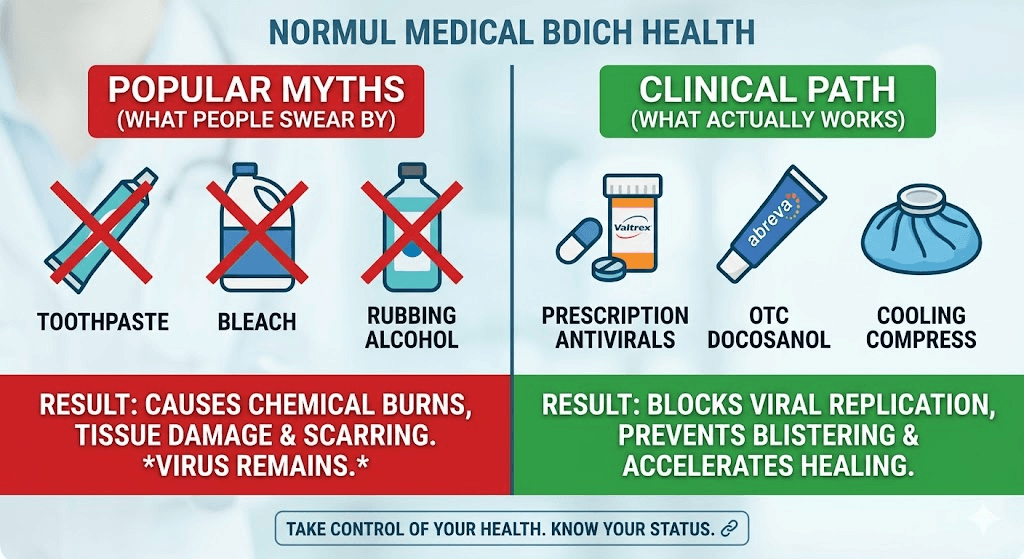
The Reality: What Happens When You Use Salt
Applying salt to a cold sore, especially one that has already “wept” or broken open, can lead to several unwanted side effects:
- Chemical Irritation: Salt is abrasive. Rubbing it into a delicate viral sore can cause localized tissue damage and intense pain.
- Delayed Healing: For a cold sore to heal efficiently, the skin needs to remain supple. Over-drying the area with salt can cause the skin to crack and bleed, which can extend healing time.
- Scarring Risk: Severe irritation from salt can cause inflammation that damages the skin’s structure, potentially leaving a permanent mark or “pitting” along the lip line.
A Human Perspective on Better Alternatives
Instead of risking a chemical burn with salt, clinical guidelines from the Mayo Clinic suggest focusing on treatments that actually interfere with the virus or protect the skin barrier:
- Hydrocolloid Patches: These keep the sore moist (the opposite of salt), preventing scabbing and allowing the skin to knit back together faster.
- Antiviral Topicals: Creams containing docosanol can shorten healing time if applied early.
- Prescription Antivirals: Medications like Valacyclovir are the only way to truly “kill” the viral replication cycle, often stopping a sore before it even becomes visible.
When to Seek a Professional Diagnosis
If you find yourself trying “home hacks” like salt because your cold sores are frequent or stubborn, it’s a sign that your body needs a more robust management plan. Relying on kitchen remedies can often mask the symptoms without addressing the frequency of the outbreaks.
True health comes from accurate information. If you are unsure why your outbreaks are recurring or if a bump is actually a cold sore, consult a healthcare professional. For many, an online HSV test is the most discreet and efficient way to confirm your status. Knowing the facts about your health allows you to move away from painful home remedies and toward a personalized, clinical plan that actually works.
FAQs
1. Does salt kill the herpes virus?
Ans: No. Salt may dry the surface of a sore, but the herpes virus lives in the nerve cells. Salt cannot reach or “kill” the virus at its source.
2. Can I use a salt-water rinse instead?
Ans: A gentle salt-water rinse can help keep the area clean, but it should not be applied as a direct paste or rubbed into the sore, as this causes unnecessary trauma to the skin.
3. Why does salt burn when I put it on a cold sore?
Ans: The burning sensation is a sign of tissue irritation and nerve pain. It is not an indication that the treatment is “working”; rather, it is a signal that you are damaging the delicate skin.