
When the weather turns or your immune system takes a hit, the skin on your lips is often the first to react. But is that dry, painful patch just a simple case of seasonal chapping, or the beginning of a viral Herpes Simplex (HSV-1) outbreak?
Distinguishing between the two is vital. While chapped lips are a localized skin barrier issue, a cold sore is a contagious infection. Treating a cold sore as mere dryness, or vice versa, can lead to unnecessary pain or the accidental spread of the virus to others. As a sexual health writer, I see these two conditions confused constantly. Here is how to tell them apart using clinical markers recognized by the Mayo Clinic and the American Academy of Dermatology (AAD).
The Quick Comparison: At a Glance
| Feature | Cold Sore (HSV-1) | Chapped Lips (Cheilitis) |
|---|---|---|
| Primary Cause | Usually, one specific spot on the lip line. | Dehydration, weather, or irritation. |
| Initial Sensation | Localized tingle, itch, or burn. | General tightness, stinging, or rawness. |
| Physical Appearance | Cluster of fluid-filled blisters. | Cracking, flaking, or overall peeling. |
| Location | Usually one specific spot on the lip line. | Often affects the entire surface of both lips. |
| Contagious? | Yes. Highly contagious via contact. | No. Completely non-contagious. |
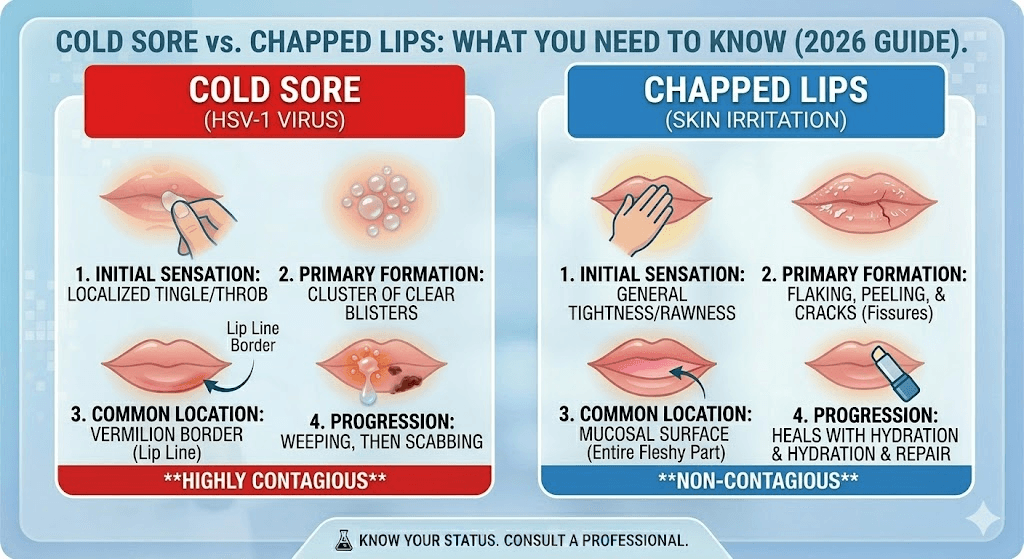
Key Differentiators to Look For
1. The “Tingle” vs. The “Tightness.”
The most reliable sign of a cold sore is the prodromal stage. This is a specific, “electric” tingling or throbbing in one precise spot that occurs before any visible bump appears. In contrast, chapped lips feel tight, raw, or sensitive across the entire lip area, usually triggered by cold air, wind, or dehydration.
2. Blisters vs. Cracks
- Cold Sores: These manifest as small, clear, fluid-filled blisters. They eventually burst, weep fluid, and form a distinct yellowish crust or scab.
- Chapped Lips: These do not produce blisters. Instead, the skin becomes brittle and develops linear cracks (fissures). If they bleed, it is because the skin was stretched or pulled, not because a blister burst.
3. Border vs. Surface
Cold sores have a “favorite” spot: the vermilion border, which is the line where your lip meets your facial skin. Chapped lips typically affect the “mucosal” part of the lip, the fleshy, pink part that you lick or bite.
The Risks of a Wrong Call
Applying a heavy lip balm directly to an active cold sore can be counterproductive, as you risk contaminating the product and spreading the virus to other parts of your mouth. Conversely, using harsh antiviral creams on simple chapped lips can cause further irritation and delay the healing of the skin barrier.
Moving From Uncertainty to Clarity
If your “chapped lips” seem to happen in the exact same spot every few months, or if your “dryness” is accompanied by a painful blister, it is time to move past the lip balm and look at the facts.
True health is about knowing, not guessing. If you are tired of the cycle of lip pain and aren’t sure if you are dealing with recurring HSV-1, consult a healthcare professional. In 2026, an online HSV test is the most discreet and accurate way to confirm your status from home. Getting a definitive diagnosis allows you to stop treating symptoms blindly and start a personalized plan that keeps your skin healthy and your mind at ease.
FAQs
1. Can chapped lips trigger a cold sore?
Yes. Severe chapping damages the skin barrier and causes “trauma” to the lip area. This stress can wake up the dormant virus, leading to a cold sore outbreak.
2. Is a cold sore contagious if it looks like a dry crack?
If that “crack” was preceded by a blister or a tingle, it is likely a cold sore in the scabbing stage. It remains contagious until the scab falls off and the skin is completely healed.
3. Will drinking more water fix a cold sore?
Hydration is great for chapped lips, but it won’t stop a viral infection. While a healthy body fights viruses better, a cold sore requires specific antiviral management to heal faster.