
As a sexual health advocate, I hear this question constantly. When you’re dealing with the intense itching, burning, and “cottage cheese” discharge associated with Candidiasis (a yeast infection), 24 hours can feel like an eternity. The desire for a fast, private, and doctor-free solution is completely understandable.
However, we need to address the clinical reality of 2026: You cannot “cure” a yeast infection in 24 hours. While you can significantly reduce symptoms and start the healing process within that window, yeast is a resilient fungus that requires a specific biological timeline, usually 3 to 7 days, to be cleared from your system. Attempting “instant” fixes, especially some of the unverified hacks found online, can often make the infection worse or cause chemical burns to sensitive tissue.
Here is the expert-vetted guide to safely managing symptoms and choosing the right path to recovery from home.
The 24-Hour Reality Check
If you are looking for relief within one day, your focus should be on symptom mitigation rather than a total cure.
| Timeframe | What to Expect | Recommended Action |
|---|---|---|
| 0–6 Hours | Identifying itch and burning. | Confirm symptoms; avoid all soaps and irritants. |
| 6–12 Hours | Peak discomfort. | Use a cool sitz bath or OTC external itch cream. |
| 12–24 Hours | Starting treatment. | Begin a 1-day or 3-day OTC antifungal (Miconazole). |
| 24+ Hours | Initial relief. | Itching should decrease, but treatment must continue. |
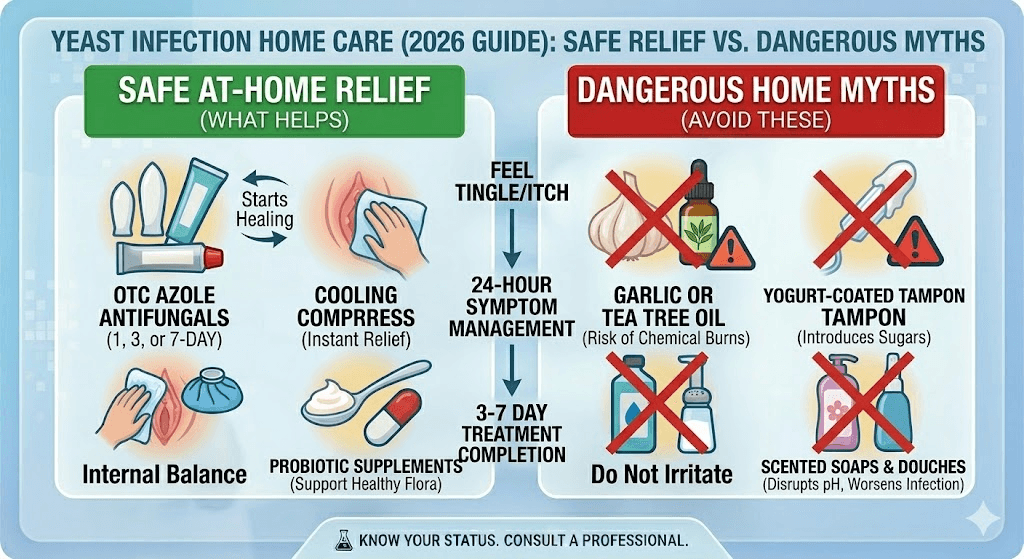
The At-Home Toolkit for Fast Relief
To get the best results without a doctor’s visit, you should stick to treatments vetted by organizations like the Mayo Clinic and the CDC.
1. FDA-Approved OTC Antifungals
The fastest way to start killing the yeast is with “Azole” antifungals, available at any pharmacy.
- 1-Day Treatments (e.g., Tioconazole): These are highly concentrated and designed for convenience. They stay in your system for days to keep fighting the fungus.
- 3-Day or 7-Day Treatments (e.g., Miconazole/Clotrimazole): While they take longer to complete, they are often less irritating for those with sensitive skin.
2. External Symptom Management
- Cooling Compresses: A cool, damp cloth applied to the vulva can provide instant (if temporary) relief from burning.
- Anti-Itch Creams: Many OTC yeast kits come with an external cream containing hydrocortisone or a topical numbing agent to stop the itch while the antifungal works internally.
3. Lifestyle “Speed” Hacks
- Breathable Fabrics: Switch to 100% cotton underwear immediately. Yeast thrives in heat and moisture; keeping the area dry is essential for recovery.
- The “Water-Only” Rule: Stop using all feminine washes, douches, or scented soaps. These disrupt your vaginal pH, allowing yeast to grow faster.
Dangerous Myths to Avoid
In the search for a “natural” 24-hour cure, many people try methods that are clinically dangerous.
- Garlic Cloves: Never insert garlic. It can cause severe irritation and lead to a secondary bacterial infection.
- Yogurt Tampons: While eating yogurt with probiotics is healthy, inserting it can introduce sugars that actually feed the yeast.
- Tea Tree Oil: This is a potent essential oil that can cause chemical burns on vaginal mucosa if not professionally formulated.
When “Home Care” Isn’t Enough
Managing an infection privately is empowering, but it requires knowing when you’re out of your depth.
Clarity is the foundation of recovery. If your symptoms don’t improve after 48 hours of OTC treatment, or if you notice a foul odor (which may indicate Bacterial Vaginosis rather than yeast), you need a definitive answer.
If you are tired of the guesswork or dealing with recurring infections, consult a healthcare professional. For many people I work with, an online sexual health test is the most discreet way to confirm exactly which strain of yeast or bacteria is causing the issue. Getting the right data allows you to move beyond “band-aid” fixes and toward a long-term plan that keeps you comfortable and in control.
FAQs
1. Can I get a prescription without a doctor’s visit?
In many cases, yes. Telehealth platforms in 2026 allow you to consult with a provider online and receive a prescription for Fluconazole (a one-pill oral treatment) if they determine it is appropriate for your symptoms.
2. Is it okay to have sex during a yeast infection?
It is highly discouraged. Intercourse can be painful, worsen inflammation, and potentially pass the infection to a partner. Wait until you have been symptom-free for at least 24 hours.
3. Why do I get a yeast infection after taking antibiotics?
Antibiotics kill the “good” bacteria (Lactobacillus) that normally keep yeast levels in check. If you are on antibiotics, speak to your provider about taking a probiotic supplement to help maintain balance.